• Skip to main content
  • Skip to primary sidebar

Andy Naselli

Thoughts on Theology

  • About
  • Publications
    • Endorsements
  • Audio/Video
  • Categories
    • Exegesis
    • Biblical Theology
    • Historical Theology
    • Systematic Theology
    • Practical Theology
    • Other
  • Contact

Judgmental Statements

February 18, 2011 by Andy Naselli

Dave Swavely, Who Are You to Judge? The Dangers of Judging and Legalism (Phillipsburg, NJ: P&R Publishing, 2005), 1–3 (numbering added):

Paul in 1 Corinthians 4:5–6 . . . says that we should not judge one another, and that we should not “go beyond what is written” (NIV, ESV). . . . [I]t seems to me that the most committed Christians are actually more susceptible to this problem than those who are not as strong.

The sin of judging is a root cause in most of the interpersonal conflicts that arise in the lives of believers, and so learning to identify and avoid this sin will go a long way toward promoting peace and joy in the body of Christ. And legalism, which is the institutional form of judging, is a dangerous disease that plagues many of our Christian institutions, from churches to schools to families, sapping their spiritual strength and weakening the work of God in their midst.

Here are some examples of judgmental and legalistic statements that I have heard from Christians, all of which we will discuss at some point in this book:

  1. “I know what you’re thinking,” or “I know why you did that.”
  2. “There is no way someone can drive a car that expensive and be a godly man.” [Read more…] about Judgmental Statements

Filed Under: Practical Theology Tagged With: judgmentalism

Should Christians Tithe?

February 16, 2011 by Andy Naselli

That’s question 38 in this book:

Thomas R. Schreiner. 40 Questions about Christians and Biblical Law. Grand Rapids: Kregel, 2010. 256 pp.

Here’s how Schreiner summaries his answer (p. 221):

Even though tithing is not mandated, there is no call in the New Testament to hoard one’s possessions or to live selfishly. Believers are commanded to support those who proclaim the gospel (Matt. 10:10; Luke 10:7; 1 Cor. 9:6–14; 1 Tim. 5:17–18). Those who are blessed with wealth are to enjoy the good things God has given them, but they are also to be generous to those in need (1 Tim. 6:17–19). The New Testament clearly teaches that wealth is dangerous because it can seduce us so that we stray from the Lord. God is to be our treasure, and hence believers are to give generously and freely. For most believers in the West, that means giving more than a tithe. Still, the tithe itself is not mandated by Scripture, and Scripture is our rule and authority rather than a tradition that requires believers to tithe.

Related: What We Should Do with Our Money (esp. the resources at the bottom of the post)

Filed Under: Practical Theology Tagged With: money, Tom Schreiner

Why?

February 14, 2011 by Andy Naselli

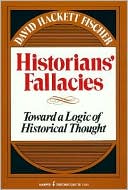
David Hackett Fischer. Historians’ Fallacies: Toward a Logic of Historical Thought. New York: Harper & Row, 1970. xxii + 338 pp. [Cf. previous post.]

This excerpt from chapter 1, “Fallacies of Question-Framing,” argues that the question “Why?” is often imprecise (pp. 12–14, numbering added):

The fallacy of metaphysical questions is an attempt to resolve a nonempirical problem by empirical means. . . .

Some historians of a humanist bent will protest that all historical problems are metaphysical problems. This is humbug. . . .

These are urgent questions, and they are empirical questions, which can be put to the test. The reader will note that none of them are “why” questions. In my opinion—and I may be a minority of one—that favorite adverb of historians should be consigned to the semantical rubbish heap. A “why” question tends to become a metaphysical question. It is also an imprecise question, for the adverb “why” is slippery and difficult to define.

  1. Sometimes it seeks a cause,
  2. sometimes a motive,
  3. sometimes a reason,
  4. sometimes a description,
  5. sometimes a process,
  6. sometimes a purpose,
  7. sometimes a justification.

A “why” question lacks direction and clarity; it dissipates a historian’s energy and interests. “Why did the Civil War happen?” “Why was Lincoln shot?” A working historian receives no clear signals from these woolly interrogatories as to [Read more…] about Why?

Filed Under: Other Tagged With: history, logic

Bob Yarbrough’s Evolving Faith and Crises of Faith

February 11, 2011 by Andy Naselli

Steve Hays and James Anderson, eds. Love the Lord with Heart and Mind. 2nd ed. n.p.: n.p., 2009.

Excerpt from the interview with Robert W. Yarbrough (pp. 140–41)

9. Looking back over your life as a Christian, how would you say that your faith has evolved over time? How, if at all, does your lived-in faith differ from when you were younger?

In general, the older I get the more gratifying it becomes to know God through faith in Christ, not least because this enriches immeasurably all other areas of my life. At the same time, the difficulties of loyal service to Christ, to the extent that I may ever approximate it, seem to grow thornier. Jeremiah said the human heart is deceitful and sick [Jer 17:9]. I’m afraid that I become personally ever more acutely conscious of this about myself as time goes by. . . .

11. Since you’ve been a Christian, have you undergone a crisis of faith? If so, how did you work through it? [Read more…] about Bob Yarbrough’s Evolving Faith and Crises of Faith

Filed Under: Historical Theology Tagged With: Robert Yarbrough

Seven Essential Elements of an Effective Shepherding Ministry

February 10, 2011 by Andy Naselli

That’s the title of chapter 9 in this book:

Timothy Z. Witmer. The Shepherd Leader: Achieving Effective Shepherding in Your Church. Phillipsburg, NJ: P&R Publishing, 2010. 268 pp.

Excerpts (pp. 193–224):

Fail to include one of these elements and the plan will be deficient and likely to falter. . . .

  1. An effective shepherding ministry must be biblical. . . . [U]nless the shepherding ministry is founded on biblical convictions, it is unlikely to survive. . . .
  2. An effective shepherding ministry must be systematic. . . . [T]here must be a plan. If shepherding the flock is something elders are called to do, it is important to have a well-considered strategy to accomplish the task. . . . [Read more…] about Seven Essential Elements of an Effective Shepherding Ministry

Filed Under: Practical Theology Tagged With: church

Getting the Old Princetonians Right

February 9, 2011 by Andy Naselli

Books like this are rare:

Paul Kjoss Helseth. “Right Reason” and the Princeton Mind: An Unorthodox Proposal. Phillipsburg, NJ: P&R Publishing, 2010. 257 pp.

Helseth destroys the fifty-years-old paradigm about the Old Princetonians (esp. Archibald Alexander, A. A. Hodge, B. B. Warfield, and J. Gresham Machen) that postconservative evangelicals continue to use today.

I’ve heard John Woodbridge rave about Helseth’s research on the Princetonians many times. Woodbridge initially encouraged Helseth to write this book, and Woodbridge’s foreword sets the historical stage for how unusual and bold this book is.

You can view a PDF of Woodbridge’s foreword (along with endorsements by scholars like John Frame, Roger Nicole, and Steve Nichols) here.

Filed Under: Historical Theology Tagged With: B. B. Warfield, history

Warfield the Affectionate Theologian

February 8, 2011 by Andy Naselli

The theologian B. B. Warfield was a scholar. One of the best. And he refused to separate theology and spirituality.

I write this in Let Go and Let God? A Survey and Analysis of Keswick Theology (p. 283, numbering added):

Pitting doctrine against devotion is a false dichotomy because God intends them to go together. They are not mutually exclusive; one without the other is incomplete.

[Note 199] Warfield strikes an outstanding balance in five articles reprinted in his Selected Shorter Writings , 2 vols., ed. J. E. Meeter (Phillipsburg, NJ: P&R Publishing, 1970, 1973), listed here chronologically:

  1. “Authority, Intellect, Heart,” 2:668–71;
  2. “The Indispensableness of Systematic Theology to the Preacher,” 2:280–8;
  3. “Spiritual Culture in the Theological Seminary,” 2:468–96;
  4. “The Religious Life of Theological Students,” 1:411–25;
  5. “The Purpose of the Seminary,” 1:374–8.

See also Andrew J. B. Cameron and Brian S. Rosner, eds., The Trials of Theology: Becoming a “Proven Worker” in a Dangerous Business (Fearn, Scotland: Christian Focus, 2010).

Those five articles by B. B. Warfield profoundly influenced me when I was in seminary. Hugely helpful and motivating.

Here’s a sample from “The Religious Life of Theological Students” (1:411–12): [Read more…] about Warfield the Affectionate Theologian

Filed Under: Historical Theology Tagged With: B. B. Warfield

Evangelize by Loving Christians

February 7, 2011 by Andy Naselli

J. Mack Stiles, Marks of the Messenger: Knowing, Living and Speaking the Gospel (Downers Grove: IVP, 2010), 103–9:

Loving Other Christians and Evangelism

On the eve of his death Jesus said, “A new command I give you: Love one another” (John 13:34). This is by far the most important command for healthy evangelism. We are to love the church. . . .

“A new command I give you: Love one another. As I have loved you, so you must love one another. By this all men will know that you are my disciples, if you love one another” (John 13:34–35). . . .

[T]his love must be seen by the world, not just felt by believers. . . .

How odd, one might say, that the best way to demonstrate that Jesus is from the Father and that we are his followers is not through method or technique or apologetics. It’s through loving, unified community among believers. . . . [Read more…] about Evangelize by Loving Christians

Filed Under: Practical Theology Tagged With: evangelism

  • « Go to Previous Page
  • Page 1
  • Interim pages omitted …
  • Page 91
  • Page 92
  • Page 93
  • Page 94
  • Page 95
  • Interim pages omitted …
  • Page 167
  • Go to Next Page »

Primary Sidebar

Subscribe via Email

What God Says in 1 Timothy

Tracing the Argument of 1 Timothy: A Phrase Diagram

How to Write a Paper: Five Steps to Writing a Theological or Literary Research Paper

Exegetical Fallacies

Tools to Study the Bible and Theology

Help! I Want to Be a Manly Man

God’s Will and Making Decisions

Predestination: An Introduction

How to Read a Book: Advice for Christian Readers

Tracing the Argument of 1 Corinthians: A Phrase Diagram

Dictionary of the New Testament Use of the Old Testament

Romans: A Concise Guide to the Greatest Letter Ever Written

Tracing the Argument of Romans: A Phrase Diagram of the Greatest Letter Ever Written

The Serpent Slayer and the Scroll of Riddles

How Can I Love Church Members with Different Politics?

The Serpent and the Serpent Slayer

40 Questions about Biblical Theology

Romans–Galatians

Three Views on Israel and the Church: Perspectives on Romans 9-11

That Little Voice in Your Head: Learning about Your Conscience

How to Understand and Apply the New Testament: Twelve Steps from Exegesis to Theology

No Quick Fix: Where Higher Life Theology Came From, What It Is, and Why It Is Harmful

Conscience: What It Is, How to Train It, and Loving Those Who Differ

Perspectives on the Extent of the Atonement: 3 Views

NIV Biblical Theology Study Bible

From Typology to Doxology: Paul’s Use of Isaiah and Job in Romans 11:34–35

Four Views on the Spectrum of Evangelicalism

Let Go and Let God? A Survey and Analysis of Keswick Theology

Collected Writings on Scripture

Introducing the New Testament: A Short Guide to Its History and Message

See more of my publications.

The New Logos

Copyright © 2026 · Infinity Pro on Genesis Framework · WordPress · Log in

Loading Comments...