• Skip to main content
  • Skip to primary sidebar

Andy Naselli

Thoughts on Theology

  • About
  • Publications
    • Endorsements
  • Audio/Video
  • Categories
    • Exegesis
    • Biblical Theology
    • Historical Theology
    • Systematic Theology
    • Practical Theology
    • Other
  • Contact

Some New Books That Discuss the Holocaust

January 10, 2011 by Andy Naselli

I recently read some new books that directly or indirectly discuss the Holocaust. All of them are worth reading. In different ways they open our eyes to how heinous humans can be, and they lead us to pray with John, “Come, Lord Jesus!” (Rev 22:20).

My favorites = books 5 and 6.

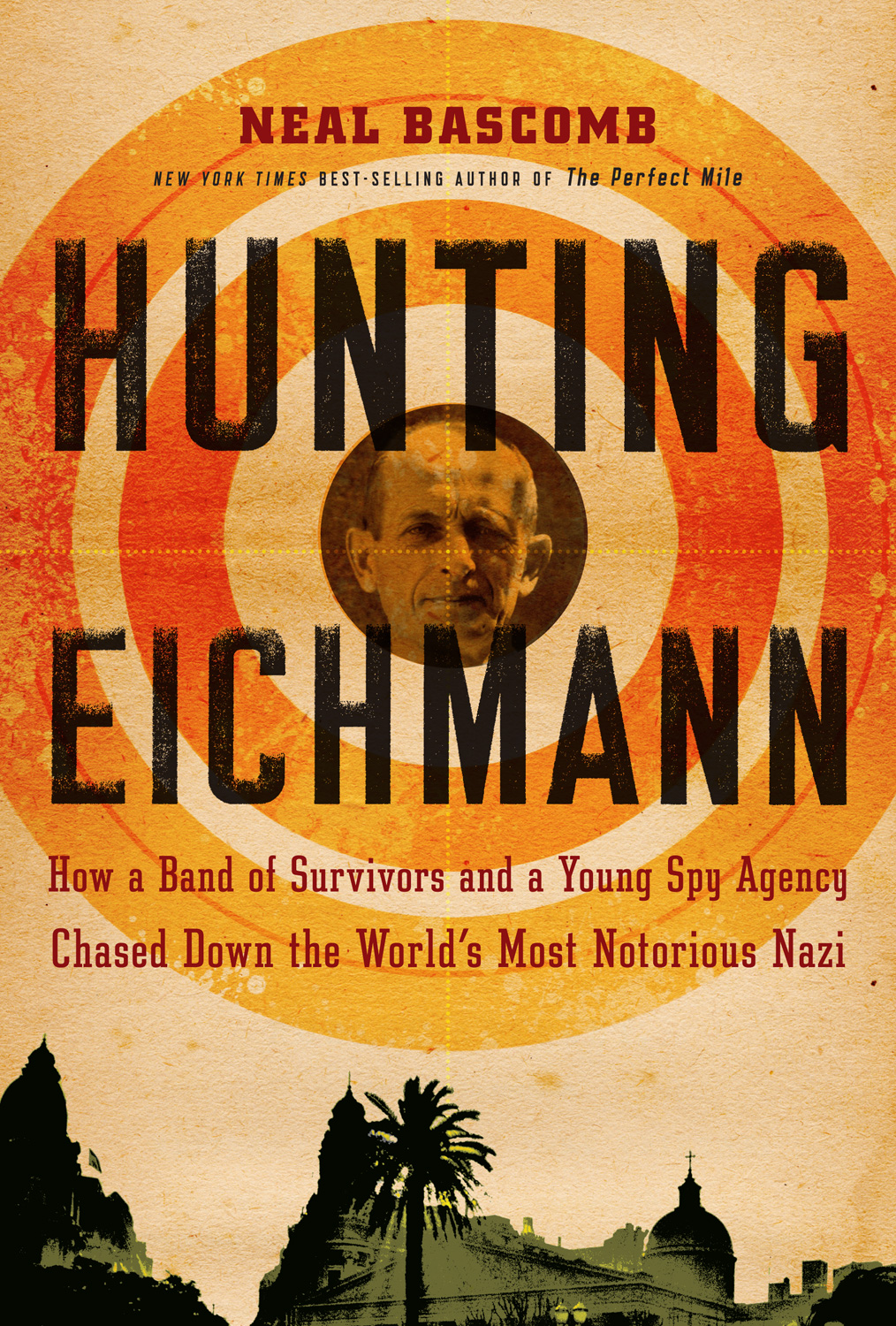
1. Neal Bascomb. Hunting Eichmann: How a Band of Survivors and a Young Spy Agency Chased Down the World’s Most Notorious Nazi. Boston: Houghton Mifflin Harcourt, 2009. Intriguing story. Excessively detailed. Would make a good modern movie.

2. George W. Bush. Decision Points. New York: Crown, 2010. Fascinating account of Bush’s life and presidency. Discusses the Middle East political quagmire, including Iranian President Mahmoud Ahmadinejad’s denial of the Holocaust.

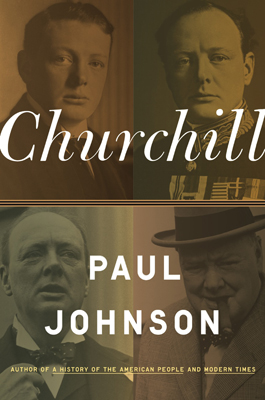
3. Paul Johnson. Churchill. New York: Penguin, 2010. Swashbuckling. Cf. my previous posts.

4. Ben Macintyre. Operation Mincemeat: How a Dead Man and a Bizarre Plan Fooled the Nazis and Assured an Allied Victory. New York: Crown, 2010. Not as thrilling as I thought it’d be. Excessively detailed. Second half is much better than first half. Suggestion: Read Malcolm Gladwell’s “Pandoras Briefcase” instead.

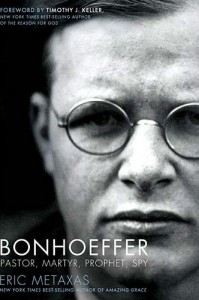
5. Eric Metaxas. Bonhoeffer: Pastor, Martyr, Prophet, Spy. Nashville: Nelson, 2010. Gripping, inspiring story. Filled with theological insights.

6. J. K. Rowling. Harry Potter and the Deathly Hallows. Vol. 7 of Harry Potter. 7 vols. New York: Levine, 2007. The Ministry of Magic : Lord Voldemort and non-pure-bloods (esp. Muggles) :: “The Ministry” of the Third Reich : Satan/Adolf Hitler and non-Arians (esp. Jews). (Jenni and I enjoyed listening to this audiobook again.)

7. Carl R. Trueman. Histories and Fallacies: Problems Faced in the Writing of History. Wheaton: Crossway, 2010. Proves why Holocaust Denial is nonsense by distinguishing between neutrality (which is “practically impossible” and “logically inconceivable”) and objectivity (pp. 17–21, 25–68; cf. “Example Two: Was Luther a Racist?” pp. 129–38).

Linda McMahon’s WWE (World Wrestling Entertainment)

Filed Under: Other Tagged With: history

Judgmentalism

January 6, 2011 by Andy Naselli

That’s the title of chapter 17 in this painfully convicting book:

Jerry Bridges. Respectable Sins: Confronting the Sins We Tolerate. Colorado Springs, CO: NavPress, 2007. 185 pp.

Judgmentalism is a sinfully “critical spirit, a condemning attitude” (D. A. Carson,  Jesus’ Sermon on the Mount and His Confrontation with the World , p. 105). We can be judgmental about nearly anything.

The point of this post is not to debate disputed positions; it’s about our disposition. It’s not about who’s right and who’s wrong; it’s about applying the gospel to our sinfully critical spirits and condemning attitudes. We might think of judgmental people as those with “stricter” standards, but people with “looser” standards can be judgmental, too. Whatever our views may be on disputed issues like the ones below, we can be guilty of judgmentalism. Jesus died for that sin.

When my mind is fixed on the gospel, I have ample stimulation to show God’s love to other people. For I am always willing to show love to others when I am freshly mindful of the love that God has shown me. (Milton Vincent, A Gospel Primer , p. 24)

*******

Jerry Bridges (b. 1929) turned 82 last month. He’s a prolific author and a humble, gospel-centered man. You can get to know him a little better via C. J. Mahaney’s brief text and audio interviews. (See also his books and audio.)

Below I quote portions of his chapter on judgmentalism (pp. 141–48, headings added). This will likely whet your appetite to read the whole chapter, especially in light of chapters 1–6.

Introduction

The sin of judgmentalism is one of the most subtle of our “respectable” sins because it is often practiced under the guise of being zealous for what is right. It’s obvious that within our conservative evangelical circles there are myriads of opinions on everything from theology to conduct to lifestyle and politics. Not only are there multiple opinions but we usually assume our opinion is correct. That’s where our trouble with judgmentalism begins. We equate our opinions with truth. (p. 141)

Example 1: Dress

I grew up in the mid-twentieth century, when people dressed up to go to church. Men wore jackets and ties (usually suits and ties) and women wore dresses. Sometime in the 1970s, men began to show up at church wearing casual pants and open-collar shirts. Many women began to wear pants. For several years, I was judgmental toward them. Didn’t they have any reverence for God? Would they dress so casually if they were going to an audience with the president? That sounded pretty convincing to me. [Read more…] about Judgmentalism

Filed Under: Practical Theology Tagged With: judgmentalism, worldliness, worship

Worship Traditions

January 5, 2011 by Andy Naselli

John M. Frame, The Doctrine of the Word of God (A Theology of Lordship; Phillipsburg, NJ: P&R Publishing, 2010), 237–38:

[The Protestant Reformers] used a very broad brush to eliminate from their theology and worship anything they considered contrary to Scripture or supplementary to Scripture. So the doctrine of the sufficiency of Scripture has served as a weapon against the imposition of extrabiblical notions on the conscience of the believer.

Nevertheless, nearly five hundred years have passed since the beginning of the Protestant Reformation, and during that time Protestantism itself has accumulated a large amount of tradition. Some of this is good, some bad. My present point is that it is just as important as ever to distinguish human tradition from the norms of Scripture and to fight any attempt to put the two on the same level of authority. Some cases in point:

. . . . Many traditions have also developed concerning worship and other aspects of church life. These concern the style and instrumentation of worship songs, the order of events in worship, degree of formality or informality, and so on. Many of these are not commanded by Scripture, but many are in accord with broad biblical principles. The problem is that church people will sometimes defend their particular practice as mandatory on all Christians, and they will criticize as spiritually inferior churches that use different styles and patterns. Often the criteria used are not scriptural, but aesthetic. People argue that this style of music is more dignified, that that liturgy is more ancient, and so forth. These aesthetic and historical criteria are often used in place of Scripture, leading to the condemnations of practices that Scripture permits and commanding of practices that Scripture does not command. That, too, in my judgment, violates the principle of sola Scriptura, the sufficiency of Scripture.

Related: John MacArthur on How to Serve Christians Who Are Needlessly Restrictive

Filed Under: Practical Theology Tagged With: worship

Five Lessons from Churchill’s Life

January 4, 2011 by Andy Naselli

Paul Johnson, Churchill (New York: Penguin, 2010), 122–25 (numbering added):

Winston Churchill led a full life, and few people are ever likely to equal it—its amplitude, variety, and success on so many fronts. But all can learn from it, especially in five ways. . . .

  1. Always aim high. . . . He did not always meet his elevated targets, but by aiming high he always achieved something worthwhile. .  .
  2. There is no substitute for hard work. . . . The balance he maintained between flat-out work and creative and restorative leisure is worth study by anyone holding a top position. . . .
  3. Churchill never allowed mistakes, disaster—personal or national—accidents, illnesses, unpopularity, and criticism to get him down. His powers of recuperation, both in physical illness and in psychological responses to abject failure, were astounding. . . . He had courage, the most important of all virtues, and its companion, fortitude. . . . In a sense his whole career was an exercise of how courage can be displayed, reinforced, guarded and doled out carefully, heightened and concentrated, conveyed to others. . . .
  4. Churchill wasted an extraordinarily small amount of his time and emotional energy on the meannesses of life: recrimination, shifting the blame onto others, malice, revenge seeking, dirty tricks, spreading rumors, harboring grudges, waging vendettas. Having fought hard, he washed his hands and went on to the next contest. . . . There is nothing more draining and exhausting than hatred. And malice is bad for the judgment. Churchill loved to forgive and make up. . . . Northing gave him more pleasure than to replace enmity with friendship, not least with the Germans. . . .
  5. The absence of hatred left plenty of room for joy in Churchill’s life. His face could light up in the most extraordinarily attractive way as it became suffused with pleasure at an unexpected and welcome event. . . . He liked to share his joy, and give joy. It must never be forgotten that Churchill was happy with people. . . . He got on well with nearly everyone who served him or worked with him, whatever their degree. . . . He showed the people a love of jokes, and was to them a source of many. No great leader has ever laughed at, or with, more than Churchill. . . . . He liked to sing. . . . He was emotional, and wept easily. But his tears soon dried, as joy came flooding back.

You can get a good flavor of what Churchill was like by watching Into the Storm: Churchill at War (HBO, 2009). (Warning: It has some strong language.) HT: Owen Strachan.

Paul Johnson, Churchill (New York: Penguin, 2010), 94:

Britain alone was not capable of crushing Germany. . . . However, he [i.e, Winston Churchill] clinched matters by persuading Roosevelt and his advisers that priority should be given to defeating Germany first. This was perhaps the most important act of persuasion in Chuchill’s entire career, and it proved to be absolutely correct.

Indeed . . . Churchill had an uncanny gift for getting priorities right. For a stateman in time of war it is the finest possible virtue. “Jock” Colville, his personal secretary, said, “Churchill’s greatest intellectual gift was for picking on essentials and concentrating on them.”

“Getting priorities right”—picking and concentrating on essentials—is also a virtue for theologians.

Filed Under: Other Tagged With: history

Tolerance Trumped Truth

January 3, 2011 by Andy Naselli

Eric Metaxas, Bonhoeffer: Pastor, Martyr, Prophet, Spy (Nashville: Nelson, 2010), 338:

Reflecting on the American church scene [in 1939], he [i.e., Dietrich Bonhoeffer] was fascinated that tolerance trumped truth.

Context here.

Filed Under: Historical Theology Tagged With: history

Prioritizing

January 1, 2011 by Andy Naselli

Paul Johnson, Churchill (New York: Penguin, 2010), 94:

Britain alone was not capable of crushing Germany. . . . However, he [i.e, Winston Churchill] clinched matters by persuading Roosevelt and his advisers that priority should be given to defeating Germany first. This was perhaps the most important act of persuasion in Chuchill’s entire career, and it proved to be absolutely correct.

Indeed . . . Churchill had an uncanny gift for getting priorities right. For a stateman in time of war it is the finest possible virtue. “Jock” Colville, his personal secretary, said, “Churchill’s greatest intellectual gift was for picking on essentials and concentrating on them.”

“Getting priorities right”—picking and concentrating on essentials—is also a virtue for theologians.

Filed Under: Systematic Theology Tagged With: history

Who Are Evangelicals?

December 31, 2010 by Andy Naselli

Christopher Catherwood [grandson of David Martyn Lloyd Jones], The Evangelicals: What They Believe, Where They Are, and Their Politics (Wheaton: Crossway, 2010), 27, 71–72, 76:

This . . . is the major divergence between evangelicals and other Protestants: we still hold to those two Reformation truths of sola fide and sola scriptura . . . .

Who Are Evangelicals?

For many readers who might not know any professing evangelical Christians, the answer to this chapter’s question might seem a simple
one, if what you see in the newspapers is any guide. An evangelical is a white, middle-class male Republican from the southern part of the United States (or, as we now have to add, a white female Republican from the rural West of America).

Now, for sure, many evangelicals would indeed fit into this description, and they are the demographic about which the mainstream news media writes the most. But, in truth, this description presents a highly misleading picture, and also a dangerous one, as it confuses evangelicalism as a whole, which is a worldwide, global movement, with just a tiny segment of it, and gives it a political coloring that is utterly atypical of evangelicals in most countries today. For it is now widely said that the average evangelical is an economically poor black Nigerian woman with numerous family members suffering from HIV/AIDS.

So wrong gender, wrong skin color, wrong country, wrong social class—in fact wrong everything when it comes to the stereotype of evangelicals we commonly see on television or in the newspapers. For the fact is that the overwhelming majority of evangelical Christians today do not live in the West at all but in what most commentators refer to as the Global South, or the Two-thirds World, since most of the world live there. . . .

[I]t is now true: African Christians are more typical of twenty-first-century Christianity—and, I would add, of evangelical Christians—than those in the now predominantly secular West.

Filed Under: Historical Theology Tagged With: evangelicalism

The Structural Difference between Matthew and Mark

December 30, 2010 by Andy Naselli

T. Desmond Alexander, Discovering Jesus: Why Four Gospels to Portray One Person? (Wheaton: Crossway, 2010), 20–21 (cf. 61–63):

While Matthew has much in common with Mark, there are two important structural differences. First, Matthew adds new material to the beginning and the end of Mark’s account.

Chart 1.3

. . . Second, Matthew adds into Mark’s mainly action-packed story five blocks of teaching by Jesus.

Chart 1.4

Although Matthew takes over almost all of Mark’s material, he is not constrained by Mark’s order. Matthew adopts a more topical arrangement and sometimes significantly changes the order in which Mark describes things.

Related: See my interview with Desi Alexander on biblical theology.

Filed Under: Exegesis

  • « Go to Previous Page
  • Page 1
  • Interim pages omitted …
  • Page 94
  • Page 95
  • Page 96
  • Page 97
  • Page 98
  • Interim pages omitted …
  • Page 167
  • Go to Next Page »

Primary Sidebar

Subscribe via Email

What God Says in 1 Timothy

Tracing the Argument of 1 Timothy: A Phrase Diagram

How to Write a Paper: Five Steps to Writing a Theological or Literary Research Paper

Exegetical Fallacies

Tools to Study the Bible and Theology

Help! I Want to Be a Manly Man

God’s Will and Making Decisions

Predestination: An Introduction

How to Read a Book: Advice for Christian Readers

Tracing the Argument of 1 Corinthians: A Phrase Diagram

Dictionary of the New Testament Use of the Old Testament

Romans: A Concise Guide to the Greatest Letter Ever Written

Tracing the Argument of Romans: A Phrase Diagram of the Greatest Letter Ever Written

The Serpent Slayer and the Scroll of Riddles

How Can I Love Church Members with Different Politics?

The Serpent and the Serpent Slayer

40 Questions about Biblical Theology

Romans–Galatians

Three Views on Israel and the Church: Perspectives on Romans 9-11

That Little Voice in Your Head: Learning about Your Conscience

How to Understand and Apply the New Testament: Twelve Steps from Exegesis to Theology

No Quick Fix: Where Higher Life Theology Came From, What It Is, and Why It Is Harmful

Conscience: What It Is, How to Train It, and Loving Those Who Differ

Perspectives on the Extent of the Atonement: 3 Views

NIV Biblical Theology Study Bible

From Typology to Doxology: Paul’s Use of Isaiah and Job in Romans 11:34–35

Four Views on the Spectrum of Evangelicalism

Let Go and Let God? A Survey and Analysis of Keswick Theology

Collected Writings on Scripture

Introducing the New Testament: A Short Guide to Its History and Message

See more of my publications.

The New Logos

Copyright © 2026 · Infinity Pro on Genesis Framework · WordPress · Log in

Loading Comments...