• Skip to main content
  • Skip to primary sidebar

Andy Naselli

Thoughts on Theology

  • About
  • Publications
    • Endorsements
  • Audio/Video
  • Categories
    • Exegesis
    • Biblical Theology
    • Historical Theology
    • Systematic Theology
    • Practical Theology
    • Other
  • Contact

Calvinism: Deeply Experiencing God’s Grace

March 11, 2014 by Andy Naselli

5pointsIn some circles Calvinism unfortunately has a reputation for being sinfully contentious, especially when self-labeled Calvinists are arrogant and when non-Calvinists misunderstand what Calvinism really is.

This 94-page book should help:

John Piper. Five Points: Towards a Deeper Experience of God’s Grace. Fearn, Scotland: Christian Focus, 2013.

It’s available as a free PDF.

[Read more…] about Calvinism: Deeply Experiencing God’s Grace

Filed Under: Systematic Theology Tagged With: Calvinism, John Piper

Walking with God through Pain and Suffering

March 6, 2014 by Andy Naselli

Pain_SufferingI read this one slowly because it’s so rich:

Timothy Keller. Walking with God through Pain and Suffering. New York: Dutton, 2013. 12-page PDF sample.

Keller shrewdly addresses the issue from three angles:

  1. cultural
  2. biblical-theological
  3. practical

This book brims with wisdom from decades of pastoral ministry.

A Review and Interview

  1. Joni Eareckson Tada’s review
  2. Collin Hansen’s interview

5 Excerpts

  1. Life for our ancestors was filled with far more suffering than ours is. And yet we have innumerable diaries, journals, and historical documents that reveal how they took that hardship and grief in far better stride than do we. (p. 15)
  2. [S]ecularization thins out traditional beliefs . . . . And this secularized belief in God, or this residue of Christianity, may be the worst possible preexisting condition in which to encounter suffering. (p. 58)
  3. If an all-powerful and all-wise God were directing all of history with its infinite number of interactive events toward good ends, it would be folly to think we could look at any particular occurrence and understand a millionth of what it will bring about. (p. 101)
  4. If there is no Judgment Day, then there are only two things to do—lose all hope or turn to vengeance. (p. 116)
  5. [I]t is even more likely that this kind of betrayal [one of four types of suffering that Keller presents] happens simply through a personal relationship going sour. When someone perceives that they have been wronged by you, they may embark on a program of trying to hurt you or damage your reputation. Often someone you thought you knew well can turn on you and attack you because it furthers their career or interests. Personal betrayals are particularly horrific, and this sort of trial can tempt you to give in to debilitating anger and bitterness. While the first kind of suffering requires that you learn repentance, this kind of suffering will entail that you wrestle with the issues of forgiveness. The temptation will be to become bitter and to hide your growing hardness and cruelty under the self-image of being a noble victim. (p. 210)

Epilogue: 10 Things We Should Do

Keller’s epilogue summarizes the book (pp. 320–22, formatting added):

Let’s summarize what we have learned. If we know the biblical theology of suffering and have our hearts and minds engaged by it, then when grief, pain, and loss come, we will not be surprised, and can respond in the various ways laid out in Scripture. Here they are organized into ten things we should do.

    1. First, we must recognize the varieties of suffering. Some trials are largely brought on by wrong behavior. Some are largely due to betrayals and attacks by others. Then there are the more universal forms of loss that occur to all regardless of how they live, such as the death of a loved one, illnesses, financial reversals, or your own imminent death. A final kind of suffering could be called the horrendous—such as mass shootings in elementary schools. Of course, many actual cases of suffering combine several of these four types. Each kind of suffering brings somewhat different kinds of feelings—the first brings guilt and shame; the second, anger and resentment; the third, grief and fear; the fourth, confusion and perhaps anger at God. While all these forms of suffering share common themes—and are addressed in common ways—each also requires its own specific responses.
    2. Second, you must recognize distinctions in temperament between yourself and other sufferers. You must be careful not to think that the way God helped some other sufferer through the fire will be exactly the way he will lead you. Simone Weil outlines the experience of affliction as consisting of isolation, self-absorption, condemnation, anger, and “complicity” with pain. A quick look at this list reveals that these factors will be stronger or weaker depending on a person’s emotional temperament and spiritual maturity, and also depending on the causes behind the adversity. Make adjustments.
    3. Third, there is weeping. It is crucial to be brutally honest with yourself and God about your pain and sorrow. Do not deny or try too much to control your feelings in the name of being faithful. Read the Psalms of lament or Job. God is very patient with us when we are desperate. Pour out your soul to him.
    4. Fourth, there is trusting. Despite the invitation to pour out our hearts to God with emotional reality, we are also summoned to trust God’s wisdom (since he is sovereign) and also to trust his love (since he has been through what you’ve been through). Despite your grief, you must eventually come to say, as Jesus did (after first honestly entreating, “Let this cup pass from me”), “Thy will be done.” Wrestle until you can say that.
    5. Fifth, we must be praying. Though Job did a lot of complaining and cursed the day he was born—he did it all in prayer. It was to God he complained; it was before God that he struggled. In suffering, you must read the Bible and pray and attend worship even though it is dry or painful. Simone Weil said, if you can’t love God, you must want to love God, or at least ask him to help you love him.
    6. Sixth, we must be disciplined in our thinking. You must meditate on the truth and gain the perspective that comes from remembering all God has done for you and is going to do. You should also do “self-communion.” This is both listening to your heart and also reasoning and talking to your heart. It means saying, “Why are you cast down, O my soul? Forget not his benefits, his salvation” (Ps 42; Ps 103). This is not forcing yourself to feel in a certain way but rather directing your thoughts until your heart, sooner or later, is engaged. Much of the thinking and self-communing that we must do has to do with Christian hope. Heaven and the resurrection and the future-perfect world are particularly important to meditate on if you are dealing with death—your own or someone else’s. But it is crucial in all suffering.
    7. Seventh, we should be willing to do some self-examining. The biblical image of suffering as a “gymnasium” suggests this. We must exercise care here. This does not mean we should always be looking within ourselves for the cause of our suffering. Job’s friends tried to do that, though Job’s suffering did not occur because God was trying to correct him for something. Nevertheless, Job grew in grace and maturity, and every time of adversity is an opportunity to look at ourselves and ask—how do I need to grow? What weaknesses is this time of trouble revealing?
    8. Eighth, we must be about reordering our loves. Suffering reveals that there are things we love too much, or we love God too little in proportion to them. Our suffering is often aggravated and doubled because we turned good things into ultimate things. Suffering will only make us better (rather than worse) if, during it, we teach ourselves to love God better than before. This happens by recognizing God’s suffering for us in Jesus Christ, and by praying, thinking, and trusting that love into our souls.
    9. Ninth, we should not shirk community. Simone Weil speaks about how isolating suffering can be. But the early Christian communities were famously good places to be a person in suffering. Christians “died well,” the early church authors claimed, not because they were rugged individuals but because the church was a place of unparalleled sympathy and support. Gospel doctrine should make it impossible to grow many “miserable comforters” like Job’s moralistic friends. And the Christian gospel accounts for and assigns meaning to the experience of suffering as secular society cannot. Find a Christian church where sufferers are loved and supported.
    10. Tenth, some forms of suffering—particularly the first two among the four types listed above—require skill at receiving grace and forgiveness from God, and giving grace and forgiveness to others. When adversity reveals moral failures or sinful character flaws, it means we will have to learn how to repent and seek reconciliation with God and others. When our suffering is caused by betrayal and injustice, it is crucial to learn forgiveness. We must forgive the wrongdoers from the heart, laying aside vengefulness, if we will ever be able to pursue justice effectively.

Doing all these things, as George Herbert writes, will first bring your “joys to weep” but then your “griefs to sing.”

Related

The Logical and Emotional Problems of Evil


Filed Under: Practical Theology Tagged With: problem of evil, Tim Keller

Doug Moo Videos on Romans in Logos Bible Software

March 4, 2014 by Andy Naselli

Doug Moo is my favorite exegete on Romans, a letter he has studied carefully for over forty years. (See my chronological list of his publications on Romans.)

So I’m delighted that Logos Bible Software recently released a new course: Doug Moo on Paul’s Letter to the Romans.

  • It includes about 10 hours of video clips of Doug Moo explaining Romans.
  • Doug recorded these lectures in a studio at the Logos headquarters during a week in August 2013.
  • This course releases after Logos’s first bundle of courses

     for “Logos Mobile Education.” Logos sees the educational space as one ripe for technological innovation, and they plan to add many more courses. Unlike tradition education, you get to “take the professor with you.” And the cost is lower than what most schools charge to audit a course.

Related: Watch Doug Moo Lecture on Romans in 53 Segments (for Free)

Filed Under: Exegesis Tagged With: Doug Moo, Logos Bible Software

Preparing Your Teens for College

February 25, 2014 by Andy Naselli

ChediakThis book releases on March 1:

Alex Chediak. Preparing Your Teens for College: Faith, Friends, Finances, and Much More. Carol Stream, IL: Tyndale, 2014. 64-page sample PDF. 2-minute video trailer.

Chediak’s 2011 book is for teens. This one is for their parents. Both are helpful guides.

And WTS Books has a special sale on Chediak’s book starting today. [Read more…] about Preparing Your Teens for College

Filed Under: Practical Theology Tagged With: education, parenting

What’s Best Next: How the Gospel Transforms the Way You Get Things Done

February 20, 2014 by Andy Naselli

perman

Matt Perman has been working on this book for a long time, and it’s scheduled to release on March 4:

Matt Perman. What’s Best Next: How the Gospel Transforms the Way You Get Things Done. Grand Rapids: Zondervan, 2014. 351 pp. 45-page PDF sample.

I’ve read a bit on productivity (not nearly as much as Matt), and this book is overall the most helpful one I’m aware of because it combines the best of the productivity literature (like David Allen’s Getting Things Done) with sound theology.

That’s why John Piper writes this in the foreword: [Read more…] about What’s Best Next: How the Gospel Transforms the Way You Get Things Done

Filed Under: Practical Theology Tagged With: work

David Platt Quotes Romans 1–8

February 18, 2014 by Andy Naselli

I’ve been listening to MP3s from the recent Cross Conference, and I was so edified by David Platt’s sermon “Mobilizing God’s Army for the Great Commission.” In the middle of his sermon, Platt quotes Romans 1–8 from memory. It’s powerful.

Watch it from about about 29:10 to 51:55 (video | audio):

https://vimeo.com/94519958

I heard it for the first time early last Thursday morning, and I was so moved by it that I listened to it again with my colleague Jason DeRouchie when we drove to the BCS campus together. And then I watched it in my office before class. So edifying.

Filed Under: Practical Theology

The OT in 10 Minutes and the NT in 10 Minutes

February 13, 2014 by Andy Naselli

Last week my BCS colleague Jason DeRouchie and I gave “small talks” at Desiring God’s Conference for Pastors. Our assignments were to present the Old Testament and New Testament in 10 minutes:

The OT in ~10 Minutes:

http://vimeo.com/85894785

The NT in ~10 Minutes:

http://vimeo.com/85947243

[Read more…] about The OT in 10 Minutes and the NT in 10 Minutes

Filed Under: Exegesis Tagged With: Jason DeRouchie

How to Make Your Mac Read Text Aloud

February 11, 2014 by Andy Naselli

Did you know that your Mac can read text aloud? The feature is called “Text to Speech.”

I’ve been using it in three ways:

  1. Listen to a relatively long blog post or email while doing something else that allows me to multitask.
  2. Listen to something I’m copy-editing (whether it’s something that I or someone else wrote). This helps pace me, and it helps me spot typos. Sometimes my ears hear errors that my eyes miss.
  3. Listen to an English Bible translation that I don’t already own as an audio-Bible. (On listening to audio-Bibles, see here and here.) This is especially helpful when you want to listen to a variety of English translations while looking at a particular passage in Greek or Hebrew.

So how do you do this on a Mac?

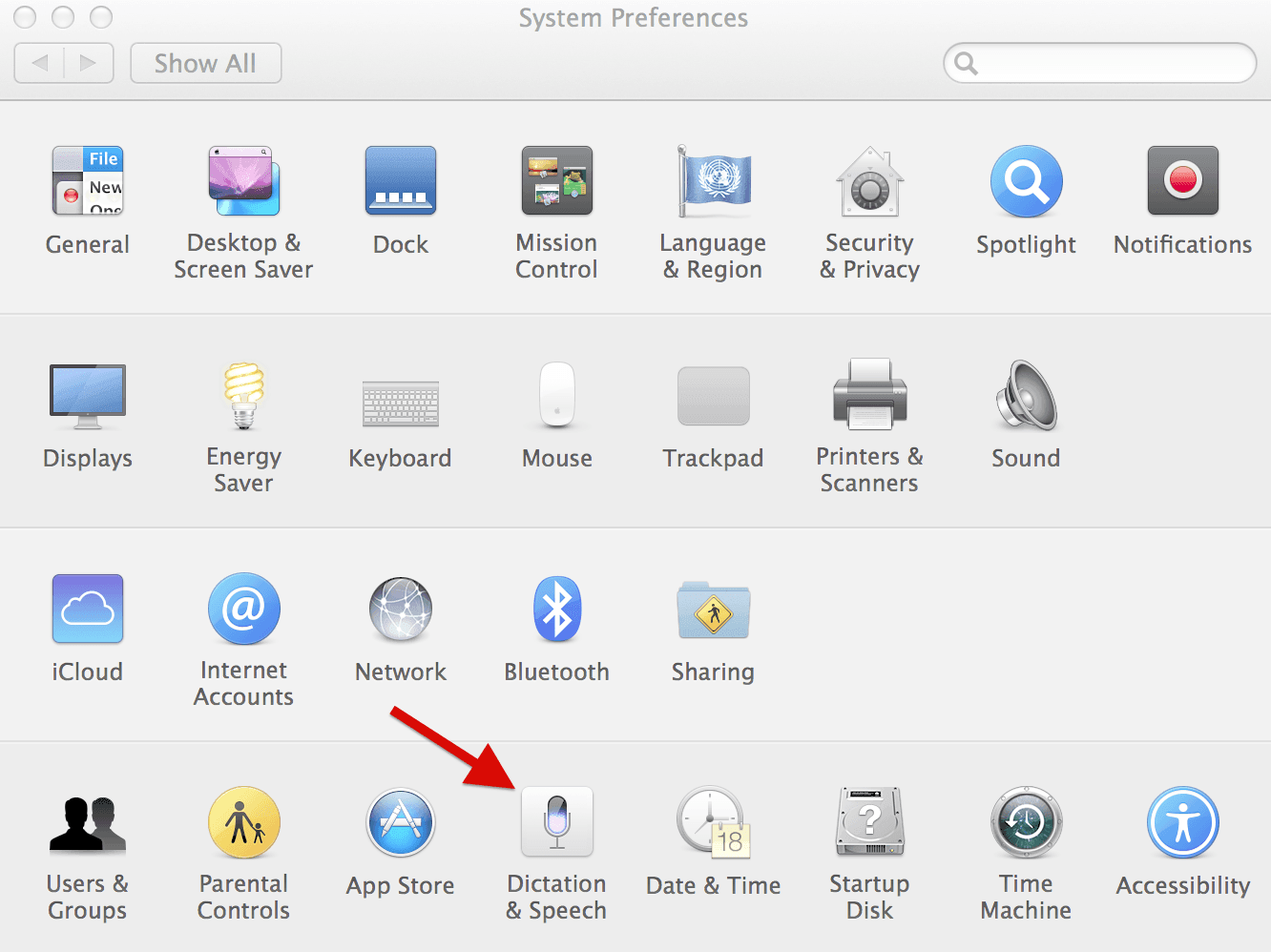
1. Open “System Preferences,” and select “Dictation & Speech.”

SP

Update on 11/7/2016: macOS Sierra does not have a “Dictation & Speech” icon. For Dictation, select Keyboard. For Speech, select, Accessibility.

[Read more…] about How to Make Your Mac Read Text Aloud

Filed Under: Other Tagged With: technology

  • « Go to Previous Page
  • Page 1
  • Interim pages omitted …
  • Page 37
  • Page 38
  • Page 39
  • Page 40
  • Page 41
  • Interim pages omitted …
  • Page 167
  • Go to Next Page »

Primary Sidebar

Subscribe via Email

Exegetical Fallacies, 3rd ed.

Exegetical Fallacies, 3rd ed.

Tools to Study the Bible and Theology

Help! I Want to Be a Manly Man

God's Will and Making Decisions

How to Read a Book: Advice for Christian Readers

Predestination: An Introduction

Dictionary of the New Testament Use of the Old Testament

Tracing the Argument of 1 Corinthians: A Phrase Diagram

https://www.amazon.com/dp/1433580349/?tag=andynaselli-20

Tracing the Argument of Romans: A Phrase Diagram of the Greatest Letter Ever Written

The Serpent Slayer and the Scroll of Riddles: The Kambur Chronicles

The Serpent and the Serpent Slayer

40 Questions about Biblical Theology

1 Corinthians in Romans–Galatians (ESV Expository Commentary)

How Can I Love Church Members with Different Politics?

Three Views on Israel and the Church: Perspectives on Romans 9–11

That Little Voice in Your Head: Learning about Your Conscience

How to Understand and Apply the New Testament: Twelve Steps from Exegesis to Theology

No Quick Fix: Where Higher Life Theology Came From, What It Is, and Why It's Harmful

Conscience: What It Is, How to Train It, and Loving Those Who Differ

NIV Zondervan Study Bible

Perspectives on the Extent of the Atonement

From Typology to Doxology: Paul’s Use of Isaiah and Job in Romans 11:34–35

Four Views on the Spectrum of Evangelicalism

Let God and Let God? A Survey and Analysis of Keswick Theology

Introducing the New Testament: A Short Guide to Its History and Message

See more of my publications.

The New Logos

Copyright © 2026 · Infinity Pro on Genesis Framework · WordPress · Log in


Loading Comments...