• Skip to main content
  • Skip to primary sidebar

Andy Naselli

Thoughts on Theology

  • About
  • Publications
    • Endorsements
  • Audio/Video
  • Categories
    • Exegesis
    • Biblical Theology
    • Historical Theology
    • Systematic Theology
    • Practical Theology
    • Other
  • Contact

Archives for December 2010

Who Are Evangelicals?

December 31, 2010 by Andy Naselli

Christopher Catherwood [grandson of David Martyn Lloyd Jones], The Evangelicals: What They Believe, Where They Are, and Their Politics (Wheaton: Crossway, 2010), 27, 71–72, 76:

This . . . is the major divergence between evangelicals and other Protestants: we still hold to those two Reformation truths of sola fide and sola scriptura . . . .

Who Are Evangelicals?

For many readers who might not know any professing evangelical Christians, the answer to this chapter’s question might seem a simple
one, if what you see in the newspapers is any guide. An evangelical is a white, middle-class male Republican from the southern part of the United States (or, as we now have to add, a white female Republican from the rural West of America).

Now, for sure, many evangelicals would indeed fit into this description, and they are the demographic about which the mainstream news media writes the most. But, in truth, this description presents a highly misleading picture, and also a dangerous one, as it confuses evangelicalism as a whole, which is a worldwide, global movement, with just a tiny segment of it, and gives it a political coloring that is utterly atypical of evangelicals in most countries today. For it is now widely said that the average evangelical is an economically poor black Nigerian woman with numerous family members suffering from HIV/AIDS.

So wrong gender, wrong skin color, wrong country, wrong social class—in fact wrong everything when it comes to the stereotype of evangelicals we commonly see on television or in the newspapers. For the fact is that the overwhelming majority of evangelical Christians today do not live in the West at all but in what most commentators refer to as the Global South, or the Two-thirds World, since most of the world live there. . . .

[I]t is now true: African Christians are more typical of twenty-first-century Christianity—and, I would add, of evangelical Christians—than those in the now predominantly secular West.

Filed Under: Historical Theology Tagged With: evangelicalism

The Structural Difference between Matthew and Mark

December 30, 2010 by Andy Naselli

T. Desmond Alexander, Discovering Jesus: Why Four Gospels to Portray One Person? (Wheaton: Crossway, 2010), 20–21 (cf. 61–63):

While Matthew has much in common with Mark, there are two important structural differences. First, Matthew adds new material to the beginning and the end of Mark’s account.

Chart 1.3

. . . Second, Matthew adds into Mark’s mainly action-packed story five blocks of teaching by Jesus.

Chart 1.4

Although Matthew takes over almost all of Mark’s material, he is not constrained by Mark’s order. Matthew adopts a more topical arrangement and sometimes significantly changes the order in which Mark describes things.

Related: See my interview with Desi Alexander on biblical theology.

Filed Under: Exegesis

The Past Is a Foreign Country

December 29, 2010 by Andy Naselli

“The past is a foreign country; they do things differently there.” –L. P. Hartley, The Go-Between

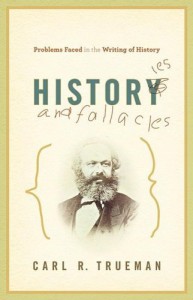
Carl Trueman’s Histories and Fallacies: Problems Faced in the Writing of History (Wheaton: Crossway, 2010) devotes chapter 3 to the problem of anachronism (pp. 109–40) and concludes the book with this useful insight:

One notable thing about immigrating to a foreign country is that the very difference of the culture to which one moves allows one to see both the idiosyncrasies of one’s new culture and of that from which one has departed. When one only ever lives in one culture, the assumption is that everything one sees and experiences is nature, the norm, and that everybody else, to the extent that they do not conform, is deviant, subnormal, etc. Cross-cultural experience is excellent for disabusing one of such instincts.

History can be like that . . . .

I have already mentioned my childhood antipathy to the Welsh rugby team, but many other things in my life, from taste in music to personal political convictions, are all more comprehensible in the light of wider historical factors. (pp. 172–74)

Filed Under: Historical Theology Tagged With: Carl Trueman, culture, history

Jim Hamilton’s Whole-Bible Biblical Theology

December 28, 2010 by Andy Naselli

“We live in an age of increasing specialization (owing in part to the rapid expansion of knowledge), and disciplines that a priori ought to work hand in glove are being driven apart.”

Don Carson wrote that in 1983. The fragmentation in theological disciplines almost two decades later is palpably worse.

So it’s not surprising that few people are writing whole-Bible biblical theologies these days. And it’s refreshing to see the recent release of this one:

James M. Hamilton Jr. [SBTS bio] God’s Glory in Salvation through Judgment: A Biblical Theology. Wheaton: Crossway, 2010.  640 pp.

  • Sample 36-page PDF and 1:45-minute video
  • Endorsements by Tom Schreiner, Kevin Vanhoozer, Desi Alexander, and Steve Dempster
  • Time-line of this book’s history
  • Audio of Jim Hamilton presenting the book’s argument (along with the book’s TOC)
  • Guest-posts on the Crossway blog: Part 1 | Part 2
  • Guest-post for the ShareFaith blog
  • Interview with Matthew Miller: Part 1 | Part 2
  • Interview for 9Marks Blog
  • Steve Dempster’s review for the 9Marks eJournal

Jim gave me the honor of reading through his manuscript last Christmas break, and I profited immensely from both his big-picture connections and his more detailed exegetical observations. He impressively demonstrates how the whole Bible coheres.

If a big book like this seems too daunting for you to read, soberly consider what the Internet (and TV, movies, video games, etc.) might be doing to your brain. (I just read Nicholas Carr’s The Shallows, and I’m convicted about how frequently I check email and Google Reader.)

Filed Under: Biblical Theology Tagged With: Jim Hamilton

Six Historians Carl Trueman Recommends

December 27, 2010 by Andy Naselli

Carl R. Trueman, Histories and Fallacies: Problems Faced in the Writing of History (Wheaton: Crossway, 2010), 176 (numbering added):

The names of

  1. Niall Ferguson,
  2. Simon Schama,
  3. Orlando Figes,
  4. Robert Conquest,
  5. Amity Shlaes, and
  6. Barbara Tuchman

should be staples on everyone’s reading list.

Filed Under: Historical Theology Tagged With: Carl Trueman, history

Interview with Chris Morgan on the Theology of James

December 20, 2010 by Andy Naselli

Chris Morgan is Associate Dean of the School of Christian Ministries and Professor of Theology at California Baptist University. He is author or editor of several books, and it’s the last of these that we discuss below:

  1. Christopher W. Morgan, Jonathan Edwards and Hell (Fearn, Scotland: Mentor, 2004).
  2. Christopher W. Morgan and Robert A. Peterson, eds., Hell under Fire: Modern Scholarship Reinvents Eternal Punishment (Grand Rapids: Zondervan, 2004). 
  3. Christopher W. Morgan and B. Dale Ellenburg, James: Wisdom for the Community (Focus on the Bible; Fearn, Scotland: Christian Focus, 2008).
  4. Christopher W. Morgan and Robert A. Peterson, eds., Faith Comes by Hearing: A Response to Inclusivism (Downers Grove: IVP, 2008).
  5. Christopher W. Morgan and Robert A. Peterson, eds., Suffering and the Goodness of God (Theology in Community; Wheaton: Crossway, 2008).
  6. Christopher W. Morgan and Robert A. Peterson, What Is Hell? (Basics of the Faith Series; Phillipsburg, NJ: P&R Publishing, 2010). (Cf. my summary.)
  7. Christopher W. Morgan and Robert A. Peterson, eds., The Glory of God (Theology in Community; Wheaton: Crossway, 2010). (Cf. my interview with Chris on this book.)
  8. Christopher W. Morgan, A Theology of James: Wisdom for God’s People (Explorations in Biblical Theology; Phillipsburg  NJ: P&R Publishing, 2010).

I recently mentioned six books “that preachers, teachers, and students will consult first and with most profit when studying the book of James.” Now I would expand that list to include Chris’s two books (#s 3 and 8 above).

1. Your first sentence in the book is this: “Non-Christians do not read the Bible; they read Christians” (p. xiii). What do you mean by that, and what does this have to do with the theology of James?

My point is that our lifestyle as the church communicates God to the world. When the church embodies love, holiness, truth, unity, and consistency, people will receive a viable portrait of God. When the world sees the church as filled with pettiness, division, and self-promotion, unbelievers’ understanding of God is inevitably distorted.

James forthrightly calls for consistency in the church. Such church consistency is crucial for our effective communication of God, and thus effective mission.

2. You mention that James helps us deal with a tension many pastors feel. What is that tension, and what do you mean by it?

Many of us as pastors and church leaders are inspired by knowing what the church can and should be. [Read more…] about Interview with Chris Morgan on the Theology of James

Filed Under: Exegesis Tagged With: Chris Morgan

The Reason for God DVD

December 14, 2010 by Andy Naselli

Jenni and I recently watched The Reason for God: Conversations on Faith and Life (Zondervan, November 2010).

It’s a stimulating two-hour DVD with six sessions (and a corresponding discussion guide ):

  1. Isn’t the Bible a Myth? Hasn’t Science Disproved Christianity?
  2. How Can You Say There Is Only One Way to God? What About Other Religions?
  3. What Gives You the Right to Tell Me How to Live My Life? Why Are There So Many Rules?
  4. Why Does God Allow Suffering? Why Is There So Much Evil in the World?
  5. Why Is the Church Responsible for So Much Injustice? Why Are Christians Such Hypocrites?
  6. How Can God Be Full of Love and Wrath at the Same Time? How Can God Send Good People to Hell?

Keller models how to discuss Christianity with non-Christians. The DVD corresponds, of course, to Keller’s New York Times bestseller The Reason for God: Belief in an Age of Skepticism (New York: Dutton, 2008).

D. A. Carson, “Editorial,” Themelios 34 (2009): 157:

In the world of Christian apologetics, I know no one more gifted in this Popperian form of argumentation than Tim Keller. Witness his The Reason for God: Belief in an Age of Skepticism (New York: Dutton, 2008). Keller manages to construct his opponents’ arguments in such a way that they are more powerful and devastating than when the opponents themselves construct them. And then he effectively takes them apart. No one feels abused, precisely because he has treated their stances more ably than they can themselves.

Related:

  1. Keller’s The Prodigal God: Recovering the Heart of the Christian Faith. Cf. my review. See also the excellent corresponding DVD: The Prodigal God: Finding Your Place at the Table (Zondervan, 2009).
  2. Keller’s Counterfeit Gods: The Empty Promises of Money, Sex, and Power, and the Only Hope that Matters. Cf. my review.
  3. Keller’s Gospel in Life: Grace Changes Everything (Zondervan, 2010). 90-minute DVD. Eight Sessions with a corresponding discussion guide.
  4. Keller’s latest book: Generous Justice: How God’s Grace Makes Us Just.

Filed Under: Systematic Theology Tagged With: evangelism, Tim Keller

Loving People You Don’t Like

December 13, 2010 by Andy Naselli

D. A. Carson, Love in Hard Places (Wheaton: Crossway, 2002), pp. 52–57 (numbering added):

Not all Christians face persecuting enemies, but all Christians face little enemies. We encounter people whose personality we intensely dislike—

  1. an obstreperous deacon or warden or bishop;
  2. a truly revolting relative;
  3. an employee or employer who specializes in insensitivity, rudeness, and general arrogance;
  4. a business competitor more unscrupulous, not to say more profitable, than you are;
  5. the teenager whose boorishness is exceeded only by his or her unkemptness;
  6. the elderly duffers who persist in making the same querulous demands whenever you are in a hurry;
  7. the teachers who are so intoxicated by their own learning that they forget they are first of all called to teach students, not a subject;
  8. the students so impressed by their own ability or (if they come from certain cultures) so terrified by the shame of a low grade that they whine and wheedle for an “A” they have not earned;
  9. people with whom you have differed on some point of principle who take all differences in a deeply personal way and who nurture bitterness for decades, stroking their own self-righteousness and offended egos as they go;
  10. insecure little people who resent and try to tear down those who are even marginally more competent than they;
  11. the many who lust for power and call it principle;
  12. the arrogant who are convinced of their own brilliance and of the stupidity of everyone else.

The list is easily enlarged. [Read more…] about Loving People You Don’t Like

Filed Under: Practical Theology Tagged With: D. A. Carson

  • Page 1
  • Page 2
  • Go to Next Page »

Primary Sidebar

Subscribe via Email

Exegetical Fallacies, 3rd ed.

Exegetical Fallacies, 3rd ed.

Tools to Study the Bible and Theology

Help! I Want to Be a Manly Man

God's Will and Making Decisions

How to Read a Book: Advice for Christian Readers

Predestination: An Introduction

Dictionary of the New Testament Use of the Old Testament

Tracing the Argument of 1 Corinthians: A Phrase Diagram

https://www.amazon.com/dp/1433580349/?tag=andynaselli-20

Tracing the Argument of Romans: A Phrase Diagram of the Greatest Letter Ever Written

The Serpent Slayer and the Scroll of Riddles: The Kambur Chronicles

The Serpent and the Serpent Slayer

40 Questions about Biblical Theology

1 Corinthians in Romans–Galatians (ESV Expository Commentary)

How Can I Love Church Members with Different Politics?

Three Views on Israel and the Church: Perspectives on Romans 9–11

That Little Voice in Your Head: Learning about Your Conscience

How to Understand and Apply the New Testament: Twelve Steps from Exegesis to Theology

No Quick Fix: Where Higher Life Theology Came From, What It Is, and Why It's Harmful

Conscience: What It Is, How to Train It, and Loving Those Who Differ

NIV Zondervan Study Bible

Perspectives on the Extent of the Atonement

From Typology to Doxology: Paul’s Use of Isaiah and Job in Romans 11:34–35

Four Views on the Spectrum of Evangelicalism

Let God and Let God? A Survey and Analysis of Keswick Theology

Introducing the New Testament: A Short Guide to Its History and Message

See more of my publications.

The New Logos

Copyright © 2026 · Infinity Pro on Genesis Framework · WordPress · Log in

Loading Comments...